Showing posts with label Ray Dennis Steckler. Show all posts

Sunday, 21 April 2019

Goof on the Loose - the Films of Ray Dennis Steckler - Part 2 - the 'Las Vegas' Years

Welcome back to Part 2 of the Ray Dennis Steckler story - you can read Part 1 here.

Sinthia: The Devil's Doll (1970) At the end of Part 1 we left Steckler just after he had completed his gumshoe thriller Body Fever. The following year - 1970 - he wrote and directed his first straight out horror film, Sinthia: The Devil's Doll. Although things aren't quite as simple as that, for Sinthia's sets, again filmed in the director's LA basement, are pretty similar to some of the setups used in Body Fever; many of the actors feature in both films and several of the nightclub shots in his earlier movie are also used in this one - so it's likely that a lot of Sinthia was filmed contemporaneously with Body Fever, maybe as early as 1968 - certainly it sat on the shelf for a while until its US release in June of 1970.

Photographed, co-written and directed by Steckler, this is the first movie where he used an alias he would employ in many later films - and also as occasional nom de porn - Sven Christian (a name he may have in part taken from Sven Johannsen, a character in a film he briefly worked on, also in 1968, called Sappho Darling, directed by Gunnar Steele). Body Fever had included (brief) nudity for the first time in one of his movies, and in the DVD commentary for that flick he hinted that those scenes were included against his better judgement, but because audiences demanded it. As this doesn't seem to square with Ray's oft stated objective to film strictly on his own terms, it can only be explained by his understanding that skin meant bucks in terms of box office - something he was to learn well, but at personal cost. But Body Fever's tone also denoted a move to darker themes which Steckler would pursue throughout most of the rest of his career, in contrast to his earlier, more lighthearted films. It was Texan executive producer Dorothy Sonney who approached Steckler with the idea to make "something weird" with a lot of nudity, and boy did he succeed with Sinthia.

Working from a script by Steckler and his go to guy Herb Robins (who also appears in the film as Lucifer) Sinthia is a dense and often impenetrable work by anyone's standards. Like a case from Freud's notebooks shot through with Kenneth Anger's filmic sensibilities, it's the story of Cynthia Kane, who, as a 12 year old, killed both her parents after witnessing them making love, and burned their house to the ground. Too young to be prosecuted, she grew up into an attractive 20 year old who is plagued with nightmares of her earlier deeds and a pronounced daddy fixation. Under the care of a psychiatrist, Cynthia is encouraged to face her demons and eventually kill herself in a dream state to rid her mind of its terrible persecutions.

Sinthia is unlike anything else that Steckler had made thus far; often maligned for its repetition and slow pace (this is Steckler we're talking about), it exerts a Last Year in Marienbad style hypnotic state in the viewer, and its dream within a dream logic, containing then very fashionable kaleidoscope effects and coloured gels - which would not be out of place in any of the more arty movies of the period - once again shows that Ray (who photographed the thing) knew what he was doing behind the camera.

As Cynthia ("Synthia" in the credits and on the poster), Shula Roan (real name Bonnie Allison) is interesting if limited in range, which is not surprising since she was a Sunday school teacher, not an actress. Introduced to Ray by Ted Roter (better known as Peter Balakoff, although credited as Boris Balakoff in this movie), the director was immediately impressed and, if stories are correct, cast her on the spot (he had been looking at actresses for the character of Cynthia for weeks) - a typically Steckler thing to do. Roan is given some rather ripe lines which would lead to accusations of overacting in a thespian of a higher calibre; as well as her frequent cries of "Daddy! Daddy!!" she's asked to utter dialogue like "Flesh upon flesh; my mother, my father and I" and "The devil is living in my brain!" The scenes of Cynthia's descent into hell ("Go where you will and Lucifer's disciple will reclaim you!") are rather Edward D. Woodian, but Roan does well to carry the movie, in that as a non actress she's in pretty much every scene.

Others in the cast included: Playboy model Diane Webber as 'The Housewife,' who had previously done quite a lot of TV (including an episode of Alfred Hitchock Presents in 1961; maybe that's how she met Steckler?); Brett Zeller, as Carol, who had also starred in Body Fever - and as a keen artist provided the paintings for both movies; and Gary Kent, playing Cynthia's father (another Steckler regular who had appeared in The Thrill Killers and Body Fever).

Sinthia was released in the UK as Where the Devil Toils on a double bill with the hilariously named softcore comedy One Million AC/DC (scripted by one Edward D. Wood Jr, fact fans) at the private Tatler chain of cinemas. It also had a later video release as Teenage She Devil.

Blood Shack aka The Chooper (1970/71) At the beginning of the 1970s, Ray had separated from Carolyn Brandt, moved away from Los Angeles and set up camp in Las Vegas. The reasons for the move, given in various interviews, ranged from not being able to find anywhere to park in California, the smog in the city which affected his allergies, to the need to escape from Hollywood, a place that had always turned its back on the director. I'm also willing to bet that his split from Carolyn had something to do with it - we know that she separated from him - although, as we'll see, the couple were somehow able to separate their personal and professional lives to allow them to keep working together. Whatever the reason, when he relocated to Vegas he was an unknown quantity once again. What we do know is that he opened up a furniture store with Ron Haydock, and was pretty cash strapped. Nevertheless he managed to scrape together $500, rented a remote shack in Death Valley for three months, and started work on a new movie, The Chooper.

The Chooper is a different movie again for Steckler. It's actually a bit of a mess, not helped by having to pad the thing out with extraneous rodeo footage - shot in Pahrump, Nevada - to get the feature up to 70 minutes, which was the minimum running length to ensure theatrical distribution (a shorter version, running at slightly less than an hour and entitled Blood Shack, was also released). Steckler gave himself the pseudonym of Wolgang Schmidt - named after Wolfschmidt vodka that he had been drinking at a party - because, as he explained, no-one wanted to see Ray Dennis Steckler movies!

Working to a sort of script penned by Haydock and Steckler, The Chooper opens, after some stunning ghoulish credits by Larry Fisher, with Brandt in voiceover explaining the origin of the strange ninja type phantom haunting an old barn in the Nevada desert (the explanation - and sadly Fisher's credits - are both dropped in Blood Shack), which is actually the vengeful spirit from an old Indian tribe; an alternative name for the film was The Curse of the Evil Spirit. Brandt plays, well, Carolyn Brandt - that's actually her character name, not a slight on her acting skills - a disenchanted actress who has inherited the barn from a relative and has come out to the desert to get back in touch with nature. Here she meets Daniel (Jason Wayne), a kind of caretaker, who has a side job in getting rid of The Chooper's victims, and Tim (Haydock) who is very insistent that Brandt should sell the barn to him. We see a young girl (Laurel Spring) killed by The Chooper after she dares to stay in the barn on her own - later her boyfriend comes looking for her and he too is offed, shortly followed by a portly sheriff, investigating the disappearance of both - reliable Daniel disposes of the bodies, a service he continues to perform until he too is Choopered. After an awful lot of stomping about (and that rodeo footage) it transpires that Tim is actually the killer, having vowed to do in anyone who sets foot in his beloved barn.

Steckler made The Chooper/Blood Shack in part to prove to himself that, although based in a new part of the US, he was still first and foremost a filmmaker. I also see this as a love letter to Carolyn. She's in pretty much every scene and the camera (and its operator - Steckler himself) seems to almost physicallly yearn for her. Steckler's kids Linda and Laura are both in it, and the scenes where Carolyn interacts with them take on a tragic aspect. Her first person narration of the admittedly rather daft events in Blood Shack is perhaps the film's most compelling feature, and the whole thing has a mournful and at times elegiac quality, enhanced by beautiful footage of the Nevada mountains and the vistas of Death Valley. The film played in one theatre in Denver, Colorado, before finding its real audience on home video.

Steckler reportedly made a serial killer film right after The Chooper called Bloody Jack, with Herb Robins, Carolyn and Ray all appearing in it (the latter as Charlie Smith, reprising his gumshoe role from 1969's Body Fever). Although completed, it has never seen the light of day.

Steckler's Porn Years

By 1971, now firmly ensconced in Las Vegas and with divorce to Brandt imminent, things were clearly tough. Las Vegas opened up new business opportunities for the filmmaker, but The Chooper was the last Steckler movie to get theatrical distribution. It was around this time that he was apparently approached for The Incredible 2-Headed Transplant (whether as director or in front of the camera, I'm not sure), but turned it down.

Ray's move into hard core porn, was, for all we know about him, driven purely by the need to turn a buck; one thing that's obvious about his porn output is that it's in no way enjoyable - the films almost feel like they were made under duress, but their themes also point the way towards his future features. The director always denied his involvement in the adult film world - and indeed became quite hostile to interviewers who tried to raise the subject. However the fact that he used his non porn pseudonyms in the credits of some of these films - not to mention the continued use of Carolyn Brandt in the movies and a re-release of two of them many years later with the sex scenes excised - suggests otherwise.

Steckler started 'soft' - he was director of photography on the 1971 movie Pinocchio (sometimes referred to as The Erotic Adventures of Pinocchio), a first feature directed by Corey Allen who almost exclusively worked in TV before and since the film. Pinocchio had an impressive cast, including Dyanne (Ilsa) Thorne, Monica (The Stewardesses) Gayle, and in uncredited roles Uschi Digard and of course Carolyn Brandt. It was rumoured that a hardcore version of the movie was filmed and then trimmed to obtain wider theatrical distribution later in the 1970s, although this seems unlikely given the cast members involved, unless of course the scenes were inserts. After this there followed a large number of hard core sex films over the next seven years, all filmed under various pseudonyms or with Ray uncredited. Some of these utilised horror themes either to provide a flimsy story element prior to the action, or more integrally to the plot, and show traces of Steckler's DIY imagination.

In 1971 Steckler made three such movies. As Michel J. Rogers, he directed and produced Sacrilege. A witch in plain clothes, Cassandra (adult star Jane Tsentas, who appeared in a few horror themed shorts), brings a bookish young man back to her apartment, and seduces him in witch form. Cassandra has a cat, Lucifer, who transforms into the devil on occasion, much to the annoyance of the bookish man. The same year, as Sven Christian (the pseudonym he'd first tried out as cinematographer in Sinthia: The Devil's Doll and Blood Shack) he directed The Mad Love Life of a Hot Vampire. Carolyn Brandt, credited as Jane Bond, appears at various stages of the film as Elena, wife of Dracula, telling the story of the Count (played by Jim Parker, surprisingly as he was a top rated Las Vegas TV horror host at the time trading under the name 'Vegas Vampire'), who sends his female servants out to seduce male victims and bring back their blood. I can't help thinking that the rather unsavoury scenes of men screaming while the servants bite their dicks off after a hot night of sex may be Steckler's internal two fingers up at the adult film industry. The 50 minute short also features a portly Dr Van Helsing who plans to track Dracula down and kill him with a silver implement that looks suspiciously like a knitting needle. The Count is eventually exposed to the Las Vegas sun and disappears, leaving his hunchback assistant to grieve goofily - this is a film that has Steckler's filmic footprints all over it. Finally in 1971 came (oh stop it) The Horny Vampire, which starred Jerry Delony (an adult actor who would go on to have parts in Ilsa Harem Keeper of the Oil Sheikhs (1976) and Richard Linklater's 1990 movie Slacker) as a vampire, Victor Alexander, on the streets of Las Vegas picking up tips on how to seduce women by reading a book called, er,  '1001 Ways to Seduce Women.'

The next movie of note from this part of Steckler's career is 1973's Peeping Tom. Also known as The Creeper, it was directed by Steckler using his Sven Christian pseudonym again, with the director also providing the narration. A grubby looking guy hangs around the streets of Las Vegas, and spies on different households in various sexual situations. Of note is the first couple he sees, where the man is played by Jason Wayne (Daniel from Blood Shack), part of a couple who trade insults at each other as part of their sexual pleasure. Around this time he also carried out some camera duties for Doris Wishman, shooting all the Las Vegas scene for the infamous Deadly Weapons, starring 'Chesty' Morgan.

1974 was the year which saw Steckler write, produce and direct two films which could be seen as the apotheosis - or nadir depending on your viewpoint - of his adult filmmaking.

The first, Fire Down Below aka Perverted Passions, created under a couple of  pseudonyms - Cindy Lou Sutters and Hans B. Andersen - is important in Steckler's story because it allows us to 'read' his state of mind at this time, particularly as it's also possible that he photographed it under the fake Andersen name; it was pretty much all his movie.

We are first introduced to an unnamed man (Will Long, also in The Mad Love Life of a Hot Vampire, who according to one source, died during the filming of the movie), recently released from a mental institution, who is driving the streets of downtown LA looking for women. The movie's first narrator is the guy's probation officer who tells us that this "ordinary guy," as he's described, is out in the community because of dumb ass Americans who voted to cut Government spending and thus reduce resources to keep people locked up. The camera moves from documenting the sleaze holes of the city to showing us the guy's peeping tom activities, but the officer's narration suggests that peeping is only the tip of his weird iceberg. The next voice we hear is the man himself (unmistakably voiced by Steckler, who's expletive ridden monologues are quite a surprise for those who have viewed him as a genial family guy). The camera follows the man as he progresses from watching others to procuring the services of a prostitute. In one of the least glamorous sequences of any of Steckler's movies we watch as, naked, overweight and very sweaty, he's fellated by a prostitute before strangling her, while the probation officer returns to inform the audience that many of the man's problems stem from the small size of his penis. This leads to more strangulations, including a brief sequence where Carolyn Brandt falls victim to the murderer's hands.

Steckler introduces a second recidivist into the movie. Another unnamed guy who - the probation officer informs us - has sprung from prison, for the same fiscal reasons as the first guy. This bloke is merely a robber though - he doesn't seem interested in sex - but he sure loves to ride around on motorbikes. It's only a matter of time before the two criminals run into one another, with guy one being shot by guy two who promptly rides off into the desert, before falling off his chopper and presumably dying on the process. This final confrontation scene will be a hallmark of Steckler's future output.

There is something about the combination of ugly sex, the shots of LA theatres playing XXX double bills, and the sweaty criminals, which tells me that Steckler was in a very dark place. His voiceover of Long's character seems authentically troubled and angry, and footage of the strangler killing his ex wife...well it's just too Freudian for words.

As a postscript to this, Steckler re-cut Fire Down Below in 2003, removing all of the hardcore shots, bringing it down to a 30 minute short, retitled Faces of Evil. Not only did this action pretty much confirm that Steckler was the man behind these adult films, but also that he was keen to distance himself from the sex part of the film, while still seeing value in the violence/social commentary elements.

The second movie of 1974 was directed under another pseudonym. One 'Sven Hellstrom' was responsible for The Sexorcist aka The Sexorcist's Devil aka Undressed to Kill (a later release, timed to cash in on the success of Dressed to Kill, with the director now credited as Max Miller). This movie, which also runs about an hour, was narrated by and stars Carolyn Brandt (credited as Eva Gaulant) as freelance reporter Janice Lightning. Recently separated from her husband, but still wearing her wedding ring ("I just can't get him out of my mind," she explains), she's writing an article on Professor Ernest Von Kleinsmidt who has discovered a parchment in a swamp, which when translated and read aloud brings back the devil's disciple, Volta. Volta seduces prostitute Diane (Janice's roommate) and, now under his spell, takes the life of a client, her pimp and finally her friend Janice. Von Kleinsmidt comes to the rescue, after having worked out the evil that he had unwittingly unleashed, but evil triumphs when Diane stabs him too. Turns out that the devil commanded his disciple to get Von Kleinsmidt out of the way. Mission accomplished, the now free Volta walks back into the swamp, ready to do the devil's bidding.

About half of this movie is the usual hardcore action (although Diane is the only woman involved) but it's interesting firstly because it's probably Steckler's bloodiest film - the knife attacks aren't realistic but there's no shortage of the red stuff - and secondly, aside from the sex scenes, this is probably one of his most straightforward horror movies. It is Brandt that takes the front seat here though - she gets more screen time than in any other of his films, and the line about Lightning continuing to wear her wedding ring has a note of sadness that may just have reflected their off screen relationship.

Red Heat (1976) Again made under the Cindy Lou Sutters/Hans B Andersen monikers, here's another film which develops themes that Steckler would return to in his next 'mainstream' features. Narrated by Carolyn Brandt, who confusingly credits herself as being adult filmmaker Sutters, and tells audiences that she and her horny cameraman came from LA to Las Vegas to shoot raunchy films. Following a similar pattern to 1974's Fire Down Below - perhaps even a sequel - Red Heat's title is the name given by Brandt (as Sutters) to a red-headed model called Mary (Lovey Goldmine, a former Las Vegas burlesque dancer), who she fancies would do well in porn films. But Red has different plans; starting with knifing her two timing violent boyfriend in the shower, then roaming the streets of Las Vegas looking for victims. Interestingly Mary doesn't have sex with any of the men she kills, seducing them with the possibility of going all the way before stabbing them - again, all rather Freudian. Red Heat's other storyline follows a bike riding gun toting hoodlum who robs from people and shops, seemingly without a care in the world. The biker is almost exactly the same as the one in Fire Down Below - could these movies have been made at the same time? Brandt's laconic voice over offers no judgement - that's saved for the end when Red and the biker briefly get together before they're killed by a drunk truck driver who takes his eyes off the road; crime does not pay, suggests Sutters/Steckler.

The other plus of this movie is the extensive footage of the streets of Las Vegas, a mid 1970s celluloid time capsule. If our eyes are to be believed everyone was playing on the Strip at the time of filming, from Joan Rivers, through to Frank Sinatra Jr, Tina Turner and Village People! But what makes this film really interesting is Brandt's voice over. It's quite plausible that Stecker and Brandt's marriage ended because of their financial hard times and the director's move into the porn market, but here's Carolyn providing an ongoing narration to the on screen activities that leaves very little to the imagination, and has you wondering just how much involvement Brandt (who frequently narrated his porn output) had in Steckler's adult works?

Like Fire Down Below before it, Steckler re-cut Red Heat as Slashed... in 2003, removing the hardcore elements, reducing it to a half hour movie.

The Hollywood Strangler Meets the Skid Row Slasher (1979). We now fast forward to 1979. By this point Steckler had behind him some twenty odd porn features and shorts, and it was time time to return to mainstream film making - well mainstream for Steckler anyhow. In interview Steckler said about this movie; "I just wanted to make an unusual, silent film." The flick could be seen as the third in the quadrilogy of 'Las Vegas killer' films from the director, starting with Fire Down Below and continuing with Red Heat. In some ways this is one of Steckler's most straightforward movies. Johnathan Click (named after Mad Dog Click in The Thrill Killers perhaps?) is The Hollywood Strangler, and that's pretty much all he does; identifying young models to throttle, either finding them through ads in sex newspapers or picking them up on the street. Click seemingly isn't able to have sex with these women, but is clearly aroused by act of killing them.

The Strangler himself is played by Pierre Agostini, originally from Brazil, who renewed a 10 year friendship with Steckler when they were both selected - and then turned down - for jury service in 1979. Agostini, whose previous acting roles had included a serial rapist and a hunchback, had also been in Red Heat as Mary's violent boyfriend; while he, like everyone else in the film speaks no lines (Steckler once again recording on his trusty non sound Bolex) his subconscious thoughts are heard in the movie as he goes about his strangling business; and interestingly it's Steckler's voice, not Agostini's. The only thing we know about Click is that a woman called Marsha once seriously did him wrong, and he's out for random revenge

Click sets his sights on a red haired woman who owns a local bookstore. Little does he know that she is in fact the Skid Row Slasher (Carolyn Brandt), a woman who stalks and kills winos (Steckler was presumably originally going to leave the audience guessing as to the identity of the killer but then blows it as he can't stop filming his ex wife). Eventually of course Strangler and Slasher meet, and the mutual destruction is assured. One vaguely interesting fact is that Brandt's character gradually changes her look as the film progresses and her kills mount, from rather downbeat shop worker at the beginning to full on long legged vamp at the end - who says that crime doesn't pay?

Filmed in various Las Vegas locations (including Steckler's own home) and using his home turf of Hollywood for some of the exteriors, the movie features the usual shots of LA and Vegas streets, with accompanying sleazy and easy stock music. There's more nudity than in any of Steckler's previous non porn movies - including a topless roller disco sequence - but as mentioned before a decided slide into misogyny which one can only suppose resulted as a psychological effect of the porn years. As a suitable location backdrop, some scenes are filmed outside Las Vegas's legendary 'Flick' cinema, which reputedly showed Deep Throat and The Devil in Miss Jones continually for ten years. Steckler tried to get theatrical distribution for his movie (he even paid to have it blown up to 35mm) but couldn't create any interest.

In 1986 Steckler got married again - to Katherine, and had two daughters with her; Morgan (named after his producer and friend George Morgan) and Bailey. At this time Ray was also Professor of Film at the University of Nevada Las Vegas, and taught there for a number of years, before leaving following a disagreement. In the same year he landed a rare late acting role as a college professor in Dale Trevillion's comedy movie Las Vegas Weekend, rather a lost movie. A year later he started work on a movie called Angel of Vengeance, but was apparently sacked as director after three days of filming by producer Jeffrey C Hogue, in a dispute with the legendary Ted V. Mikels who was serving as Director of Photography on the project. Mikels was Ray's friend, and although Steckler is uncredited in the film, two of the characters wear T Shirts sporting the 'The Thrill Killers' logo - which is probably Ted's way of saying sorry to Ray for what happened.
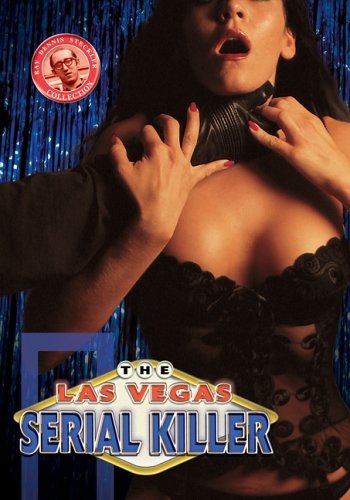
Las Vegas Serial Killer (1986) After a further 14 or so porn shorts and features, Steckler would return to the Johnathan Click character for his next 'mainstream' film. Now credited as Johnathan Glick, Pierre Agostini reprises his role as the wandering murderer. At the end of The Hollywood Strangler... it seemed that Click had met his end at the hand of the Skid Row Slasher. But in a move redolent of those 1940s serials so beloved by Steckler, it turns out this was a cliffhanger ending; Click/Glick is alive and well, having just been paroled from a life sentence because the prosecutors could only found evidence of one of his supposed seven murders. Huh?

So while Johnathan returns to the mean and murky streets of Las Vegas, two other hoodlums are headed to the same city. They are Clarence (played by Ron Jason, who according to Steckler, in a story more apocryphal than truthful, he had met when Jason came to fix his air conditioning) and Jack (ex policeman Chris Cave). These two ne'er-do-wells are basically muggers, preying on the unsuspecting citizens of Sin City.

Johnathan's first victim is a guest at a celebrity party thrown for the actor Cash Flagg (Steckler's alter ego, although he doesn't appear in the film). She's played by Linda Savage, who would go on to co-run Mascot Video with Ray. From there on in the body count rises, as the newly dubbed Las Vegas Serial Killer works his way through Vegas's lowest rent models and showgirls. Initially gaining access to homes via a job as a pizza delivery man, he steals a camera from one of his victims which enables him to resume his previous method of murder, inviting young girls to photo shoots then strangling them.

It's inevitable that the Strangler and Clarence and Jack will run into each other; their first almost meeting is one of the high points of the film; our hoodlums hold up an executive in his office, steal his money and abduct his secretary, locking her in the boot of his car so she can't blab. Along comes Johnathan, hears the noise of someone locked in a car, opens the boot and strangles the secretary!

Steckler's film has interest value mainly for the extensive street shots of a now largely vanished Las Vegas, filmed when the city was less dense and populated than it is now. Unfortunately the movie is bogged down by some more rodeo footage, lengthy scenes from the Eldorado street parade and a vintage airplane show. Eventually the hoodlums and the Strangler meet - when he gets in the way of one of their robberies and is gunned down as a result - and there is almost an air of Greek tragedy in the inevitability of the confrontation; something shared with Steckler's previous Las Vegas features. The final shot shows Clarence and Jack discarding the murder weapon in a dumpster, only for the pistol to be retrieved by two passing kids, who hold the weapon covetously. Could they grow up to be criminals of the future, poses Steckler?

As well as using the usual Sven Christian/Wolfgang Schmidt pseudonyms, another credit on the film proudly announces Ray's new wife Katherine as producer (she also appears in the movie and does some of the voice over duties). While this suggests that Brandt was now out of the picture, literally and metaphorically, Carolyn would continue to work with Steckler; she narrated three more pornos although remained uncredited on all of them, before retiring from the business altogether in 1983 and rediscovering her first love of dancing. In 1994 Steckler made Carolyn Brandt: Queen of Cult, a 60 minute documentary celebrating his ex wife's career.

Steckler started a third 'Strangler' film with Agostini, possibly to be called 'The Return of the Hollywood Strangler,' but abandoned it less than halfway through as Pierre's heart wasn't in it - presumably he went back to his drywall business. A fourth and fifth were planned but uncompleted;  'The Son of the Hollywood Strangler' and 'The Las Vegas Thrill Killers,' which utilised some of the cast from The Las Vegas Serial Killer.

In the 1980s Steckler also opened Mascot Video, acquiring two stores in Las Vegas, which he used as a base for selling his movies (the shops were named after one of his favourite movie companies). It became a bit of a haunt for fans (and also one of the only places to actually pick up Steckler movies and memorabilia) before he sold it on in 1995. Steckler continued to sell his movies on line until his death, along with taped compilations of actresses and dancers, often nude, culled from audition footage.

As the years wore on Steckler's output diminished. He appeared (uncredited) in another Ted V. Mikels film, Dimension in Fear (1997), which starred Ron Jason. The same year he made the little seen Summer of Fun. Apparently the idea for this movie dated back to the 1960s, when Ray and Ron Haydock came up with the idea of a film featuring two detective characters called 'Flip' and 'Flop.' The detective element was ditched but the character names remained in the movie, a 62 minute silent family film shot around Lake Tahoe, which looked back to the more innocent years of Rat Pfink A Boo Boo and The Lemon Grove Kids, but which very few have actually seen. The cast, assembled by his long time friend and associate Herb Robins, included the then Miss Mississippi, later to make the finals of Miss America as well as his daughter Bailey (drafted in at the last minute while on vacation in the area when the lead cast for the part walked shortly before shooting was due to start).

If Summer Fun is hard to see, then his next movie Long Road Home, 'made' in 2005, is impossible, if it even exists (in fact the only reference I can find to it is a mention in Anthony Curtis's 'Las Vegas Adviser' website, where the film is described as a 'wholesome opus' about 'a couple of old-timers trying to find their way in life.' And on YouTube, credited two years after (2007) there are some shots from a supposed eight part series called Reading, Pennsylvania, a documentary where Steckler interviews people from his past in his home town. In one interview Steckler had also talked about making a forty years on sequel to The Thrill Killers, where Mad Dog Click retires to Reading, but encounters a cop, a relative of one of Click's victims, who wants to frame him for murder. But that one never came to light.

In 2007 Steckler got his final acting credit, as 'The Voice' in a short film Hooligan's Valley, which went on to be included in a feature length collection of shorts called Visions of Horror. Hooligan's Valley was summarised by one critic as featuring "a town chock-full of odd characters and bizarre creatures. Itchy and Lobo must save Kitty from the evil Primo. The story unfolds like an old film noir movie, but one gleefully brimming with clowns, wrestlers, zombies, pirates, and alligator people."

One More Time aka The Incredibly Strange Creatures 2 (2008) Steckler's last film, made just a year before his death, was described by the director as an 'extension' of his first major work, Incredibly Strange Creatures... Despite its rather disjointed story, thrown together approach and threadbare budget (it was filmed using two Digital 8 cameras on a budget of $3,800) it's a poignant film, which in looking back at Ray's most famous work, offers a typically idiosyncratic farewell letter to moviemaking.

Steckler returns to the role of Jerry from Incredibly Strange Creatures... (credited as Cash Flagg, natch). Now 70, Jerry has been having dreams (flashbacks?) which allow him to utilise large chunks of the original film. He confides in a psychiatrist (John G. Waite), who seems to know all about the characters in Incredibly Strange Creatures... and the threat that they may pose to Jerry. Jerry visits a psychic who gives him a tarot reading but also hypnotises him, returning him to the murderous state that was his undoing in the 1964 movie. After a killing spree, Jerry is seated in a pizza restaurant where he's visited by a young woman - Natasha - who is the granddaughter of Marge Nielsen (killed by Jerry in the original movie) and revenges her mother's death by stabbing Jerry.

But then another Natasha turns up, excited about being cast in the remake of Incredibly Strange Creatures... She even thinks that Nicolas Cage would make a good Jerry (an in joke about their facial similarity). So it appears that the flashbacks may have been a fantasy in Ray's brain as he struggles to get the money together for a remake of the 1964 movie.

There's something terribly sad about One More Time, almost as if Steckler knew he wasn't long for this world, and wanted to revisit a happier time. The scenes of an older and out of breath Steckler walking around a Californian funfair, similar to those of his youth, are very poignant. Rockabilly band 'The A Bones' provide a soundtrack which utilises songs associated with Steckler's career, including the Frank Zappa penned theme from The World's Greatest Sinner and Ron Haydock's 'You're a Rat Pfink' from Rat Pfink a Boo Boo. The inclusion of Haydock's 'I Stand Alone' from Rat Pfink takes on a new poignancy watching Ray walking, looking a little lost, while a younger generation enjoy the fair, seemingly without a care in the world.

But perhaps the most touching scene comes towards the end of the movie. Ray has been trying to raise funds for his film, and although a friend has offered him $500, he feels that a trip to Las Vegas with some of his family may provide the project with additional funds he requires. What happens is that, in a piece of unstaged footage, his family wins big on the slot machines to the tune of $5,000. There's no question that the money will be used to give the Stecklers a great Christmas, but if Ray had only been given the funds he could have delivered his remake.

Ray Dennis Steckler, in the final frame of his final film,
One More Time
Ray Dennis Steckler died of cardiac arrest  at the age of 70 after battling heart disease for over 10 years. He is buried in Palm Memorial Park, Las Vegas, Clark County Nevada.

One of Ray's many unrealised projects was a video documentary series on the cast of the B western movies of the 1930s and 1940s. Ray was endlessly fascinated with the directors and actors who made and featured in these low budget quickies. In an interview with 'Cult Movies & Video' magazine, Steckler referred to one of these, Nat Levine, producer at Mascot Pictures, who made over 100 movies between 1921 and 1946. "He worked out of his pocket," explained Steckler. "What made...Levine what he was at Mascot was being an independent. Whatever he had, he knew how to make use of it...everything he did was one of a kind, good, bad or indifferent.The thing is there's a certain magic to all of them...I think a lot of my little movies have that. They'll just keep going on and on and on."

Rest in Peace Ray.

Friday, 30 November 2018

Goof on the Loose: The Films of Ray Dennis Steckler - Part 1 - the 'Hollywood' Years

Ray Dennis Steckler in later years
It's the first time I've split a single post into two parts, but there's a lot of characters in this story and I want to do them justice.

A while back I wrote a piece on the movies of Arch Hall, father and son. Loosely intertwined in Hall Sr and Jr's cinematic story was another genuinely independent but arguably way more talented film making oddball: Ray Dennis Steckler.

Born in Reading, Pennsylvania in 1938, Steckler was raised by his movie loving grandma, who no doubt would have exposed him to The Bowery Boys, The Three Stooges, Monogram and Producers Releasing Corporation westerns and the spookshow movies of the 1940s, all of which would find themselves informing his work. And one of the things I love about Steckler is that he never forgot these influences, which, combined with a profound sense of family and home - his earlier films were all located in his LA neighbourhood and often featured friends and acquaintances - gives a real sense of someone in love with film for its own sake rather than for commercial reasons.

Following the inevitable production of 8mm films with his mates as kids, using a camera bought for him by his grandma, and with the taste for visual arts fuelled by the study of photography as a military cameraman between 1956 and 1959, after army service Steckler headed for Hollyweird USA. Cutting his teeth working behind the scenes on TV shows handling props (including a stint at Universal where, employed on Alfred Hitchcock Presents, he quit before being fired following a near miss with Hitch while pushing a wheeled A-Frame down a corridor way too fast) his first gig - as Raymond Steckler - was replacing fired cameraman Ron McManus on the eccentric Timothy Carey's 1962 little seen vehicle The World's Greatest Sinner (aka Frenzy) - according to Steckler, at one point Carey threw a boa constrictor at him. Here he worked alongside one Edgar G Ulmer and a twentysomething Frank Zappa on music duties, who went on to describe the movie as 'the world's worst film.' Now where have I heard that before?

The same year he also shot Secret File: Hollywood, his non union status ensuring that he remained uncredited on that movie - it was here that he met Arch Hall Sr for the first time. As well as working on commercials and TV series for Warner Brothers like 'Wide World of Sports' and 'The Professionals,' in 1962 Steckler lensed Rudolph Cusamano's slightly less obscure Wild Ones on Wheels aka Drivers in Hell, but this time he also appeared in front of the camera for the first time in the role of 'Preacher Man', a bespectacled hep cat character described by one critic as 'a beatnik petty criminal with a crazy patois and a sports car he calls "Baby".'

Wild Guitar - Steckler's first directing credit
Later in 1962 Steckler hooked up with Arch Hall Jr and his dad - the first of his two collaborations with the father and son film making duo for Hall Sr's company Fairway-International Pictures. Steckler took on (uncredited) camera duties, and also appeared briefly - as Mr Fishman - in the Hall Sr directed Eegah, unceremoniously dumped into a swimming pool by a resurrected caveman in the shape of seven foot plus Richard Kiel; his girlfriend - and future wife - in the scene was one Carolyn Brandt, destined to be a pivotal figure in Steckler's life. A story from the shoot recalls that the crew were filming, without permission, on land owned by one Harpo Marx. When Marx turned up to ask what the hell was going on, Steckler reportedly told him that they were shooting an educational film for UCLA, although it's unlikely that he was believed. Rather bruised by the experience of directing, Hall Sr took a back seat with the next vehicle for his son, giving rise to Ray's first directing credit - the movie was Wild Guitar. You can read more about both those films here. Steckler also had a small speaking part in this movie as a villain called 'Steak,' and it was the first time he used his alter ego name Cash Flagg, a pseudonym whose origin related to Steckler's legendary penchant for hard currency over cheques, which had a habit of bouncing in Tinsel Town.

Goof on The Loose (1964) Filmed in and around the Steckler family home and nearby Echo Park, Los Angeles and utlising friends and family (which he would continue to do in future films), this 8 minute silent independently made 'home' movie - "dedicated to the laugh makers of long ago" according to the intro card - was actually filmed in 1959, but released immediately prior to Incredibly Strange Creatures...). Its title possibly inspired by the 1953 Three Stooges short Goof on the Roof, the movie features Rick Dennis (who'd appeared in both Wild Guitar and Wild Ones on Wheels) as a drunk, and his goofy friend (Bert Leu Van) messing around in a series of visual gags and pratfalls. Carolyn Brandt turns up in beachwear as does Steckler in a cameo wearing a skirt!

The Incredibly Strange Creatures Who Stopped Living and Became Mixed-Up Zombies !!? (1964) By 1963, Ray had become fed up with being on the payroll of other movies. As he said in an interview in 2000, "I really hated working for other people."

Back in Reading, Pennsylvania, a young Steckler would spend hours at the local funfair befriending the carnival workers, a group of people who he came to love but who also taught him the art of huckstering, a talent he deployed throughout his career. It also gave him the setting for his most well known feature film, in glorious Eastmancolor, called The Incredibly Strange Creatures Who Stopped Living and Became Mixed-Up Zombies !!? which he started filming in January 1963 (apparently it's important to get the punctuation right at the end, an issue that wouldn't have occurred if the team had continued to use the film's working title, Face of Evil). This is a movie that's probably more famous for its title - changed, according to a popularly recited story, at the request of Columbia Pictures who felt that the original - The Incredibly Strange Creatures, or Why I Stopped Living and Became a Mixed-up Zombie - was too close to Stanley Kubrick's then latest picture Dr Strangelove...or How I Learned to Stop Worrying and Love the Bomb. The idea of Kubrick's legal team suing Steckler for $3 million would be rather outrageous had the director not loved the story so much (Ray's movie cost $38,000 to make and, save for a donation of $300 would probably not have been completed, as it allowed Steckler to keep a roof over his head). For a long time Incredibly Strange... was rather caught up in the 'trash films you may not like' category. Well I love it. It's far better put together than its detractors would have you believe, part of the reason being that the camera team included fledgling cinematographers Lazlo (Easy Rider) Kovacs - who also did a behind the camera stint the previous year on the Arch Hall Jr 1963 vehicle The Sadist - and Vilmos (Close Encounters of the Third Kind) Zsigmond.

Some of the Incredibly Strange Creatures...
In Incredibly Strange Creatures... Steckler (again as Cash Flagg) plays slacker Jerry, who thinks that paid work is a downer and just wants to hook up with his girlfriend, fairly posh Angela, whose folks think Jerry is a bum. Elsewhere dipso dancer Marge Neillson (Brandt) is drinking - literally - at the last chance saloon as she's told to lay off the sauce and stop fluffing her routines. Seeking her fortune, she happens on Madame Estrella's tent and learns of her impending death (a ripe performance from Brett O'Hara as Estrella - previously Susan Hayward's stand in and who also appeared in Wild Ones on Wheels - her natural beauty disguised by a gypsy outfit and hairy stick on wart). Jerry and Angela, together with their friend Harry, also have their fortunes told. Jerry ends up being hypnotised by Estrella, who turns him into a zombie. Jerry is forced to carry out murderous acts (including killing Marge and attempting to murder Angela) - it turns out that Estrella has been converting a number of the men working at the carnival into murderous beasts - and Jerry is the latest. They're all ugly bugly because the fortune teller chucks acid into their faces to disfigure them. However the zombies have the last laugh, breaking free from their place of imprisonment and exacting their revenge on Estrella. Zombie Jerry, who's only a bit of a zombie, presumably because he's running the show or was better at dodging acid, is shot dead by the police while making a heartfelt speech to Angela.

What's not mentioned in this summary are the show tunes which pepper the movie, with titles like 'Choo choo, ch'boogie' and 'Shook Out of Shape,' and a number of dance routines featuring lines of girls who've been given seemingly little or no rehearsal time. Truly the first monster musical, this is a freewheeling movie with more than a hint of being made up on the spot - and that's not a criticism; Steckler was proud of this approach to filmmaking. The exteriors were filmed at the Pike amusement park in Long Beach, California, tapping in to Steckler's fairground past, whereas the interiors were shot on sets built in an abandoned Masonic temple in Glendale, California (used the same year to shoot Vic Savage's The Creeping Terror). Steckler apparently fended off union intervention by shooting on an upper floor of the building and putting up fake signs that the lifts were out of order - nifty!

The movie was released by Fairway-International Pictures, which gave Arch the ability to sneak the flick onto the lower half of a double bill, with one of his own films as the A picture (maybe The Nasty Rabbit?). Steckler subsequently bought back the distribution rights and cued the movie up with Coleman Francis's 1961 Tor Johnson vehicle The Beast of Yucca Flats (Francis would later turn up in some of Ray's features). He maximised the shelf life of Incredibly Strange Creatures... by re-titling the film several times for re-release, including Diabolical Dr Voodoo, The Teenage Psycho Meets Bloody Mary, and The Incredibly Mixed-up Zombie. Steckler also advertised the movie in a number of different viewing formats, taking a leaf out of William Castle's huckster manual. According to Steckler, his film was shot in in “Bloody-Vision,” “Terrorama” and “Hallucinogenic Hypnovision,” the latter of which involved Steckler and his team running out into venues wearing monster masks. Whew!

The Thrill Killers (1964) "I just wanted to make another movie," said Steckler in an interview when asked retrospectively about his next film. Completed a year after filming Incredibly Strange Creatures...  and just after his stint as camera operator on Phillip Mark's nudie cutie Everybody Loves It (credited as Raymond Steckler) Steckler wrote, produced, and directed The Thrill Killers, apparently inspired by his exposure to Psycho with which he was so impressed that he saw it twice "to make sure it was a movie." But in its intensity and amoral lawlessness, not to mention the down at heel country locations, it more closely resembles Arch Hall's The Sadist (1963).

Steckler maintained that he wasn't initially to be cast in the movie, but inserted his character into it to lengthen the running time. The original story focused on the escape of three inmates from a secure facility. Having made their getaway, the prisoners, all insane, terrorise the local community. Meanwhile the brother of one them, also a crazed killer (Steckler), is called on to assist the fugitives, until the police intercept and take out the bad guys. This plot summary is purposely brief; there's a lot more to this movie than those few lines.

After a faux historic card announcing that the events in the film took place back in 1965, The Thrill Killers opens with what will become a Steckler standby - some fascinating shots of Hollywood Boulevard (which have become more so with the passing of time) including footage of Mann's Chinese Theatre, showing Mary Poppins, which had been released in August of 1964. The movie was shot in black and white by Joseph V. Mascelli (later author of industry bible 'The Five Cs of Cinematography') and an uncredited Lee Strosnider. We're introduced in voiceover - by Coleman Francis - to Joe Saxon (Joseph Bardo, onetime boyfriend of Mae West), an out of luck actor trying to get work. Back home his wife Liz bemoans his unrealistic expectations (neither are in the first flush of youth) and the lavish industry parties he throws, hoping for a casting break. Liz was played by Liz Renay, who had just got out of prison after spending 27 months incarcerated in Terminal Island, California, for perjury - laundering money for her boyfriend, the racketeer Mickey Cohen. Renay needed a job and Steckler was happy to offer her one (as subsequently did Arch Hall Sr). Her acting career never took off; she had a role in John Waters' 1977 movie Desperate Living and turned up in two of Ted V. Mikels' later works, but she successfully toured with her daughter in a joint strip act, and infamously did a streak along Hollywood Boulevard in 1974, the first grandmother to do so. Incidentally her 1992 published autobiography was entitled 'My First Two Thousand Men'; Renay's daughter Brenda, who shows up in a party scene later in the movie along with a rather tipsy looking Arch Hall Sr and The Thrill Killers' producer George J Morgan, took her own life at the age of 39 in 1982.

Ray Dennis Steckler and Liz Renay in The Thrill Killers
The trio of escaped prisoners, whose character first names are all the same as their real ones, were played by claustrophobic Gary Kent, axe wielding Keith O'Brien (sadly his only acting credit) and Elisha Cook Jr alike Herb Robins (as Flagg's brother). Robins had been very badly beaten up shortly before shooting was about to begin. Worried that Steckler wouldn't be able to put him in front of the camera because of the bruising and stitches to his face, the director went ahead and used him anyway. In close ups of his face on screen, he looks authentically messed up in a way that make up alone (on Steckler's budget anyway) just couldn't achieve.

The Thrill Killers also included Carolyn Brandt again as newly engaged Carol, young, in love but sadly despatched by one of the killers. The film also announced the arrival of Ron Haydock into Steckler's story; Haydock performed additional dialogue services on the movie and also played one of the cops at the film's climax. He was a fascinating figure in his own right (in 1977 Haydock tragically died in a highway accident after being hit by a truck at the age of 37, ironically walking home after an evening at Steckler's house - although Ray confessed in one interview that it may have been suicide). Atlas King also turns up, briefly, as a guy who is killed, and whose car is commandeered by Mort "Mad Dog" Click (played by Steckler in his Cash Flagg nom de cinema) early on in the movie - King was the donor of $300 to Steckler during the making of Incredibly Strange Creatures...which ensured that the movie got completed, and which gave King his first acting role.

Thematically The Thrill Killers is a world away from Incredibly Strange Creatures... As well as being more structured it is in places a very nasty film. Steckler's scenes, including menacing a prostitute in her room before killing her, still pack a punch today; and the arrival of the fugitives, particularly Keith, with his manic love for the axe, provides for some very disturbing moments. "Poor old Frank," muses Keith on examining the blade that's been used to behead him, "he had dandruff." (I can't help feeling that the trio might have been an inspiration for the escaped lunatics in Alan Birkinshaw's 1978 British movie Killer's Moon). The film's final reel chase, utilising the arid locations of California's Topanga Canyon - beloved of many makers of horror and sci fi films - builds a level of excitement that arguably makes this Steckler's most conventionally successful film.

The Thrill Killers was subsequently revived and shown around the country in the early 1970s at theatres and drive-ins, retitled The Maniacs Are Loose! Cashing in on the success of the 'live in the theatre' monsters stunt pulled when Incredibly Strange Creatures... toured the US (with Steckler himself as one of the 'zombies' let loose in the auditoria), it was decided to repeat the idea. A new prologue was added to the movie - in colour - with stage hypnotist Ormond Magill informing the audience that a whirling 'hypno disc' at points during the movie would prompt Cash Flagg-a-likes (recruited by theatre managers at each venue wearing masks designed by Don Post) to enter the audience wielding rubber axes.

Rat Pfink a Boo Boo (1965) After The Thrill Killers Steckler was asked to be camera operator on the soft core sex comedy Everybody Loves It (1964) and Director of Photography on an adults only movie called Scream of the Butterfly (1965) by Bill Turner and Alan Smith, who had been choreographers on Incredibly Strange Creatures... The director, Argentinian Eber Labato, had never made a film before, but was married to Nelida Labato who just happened to have a leading role in the flick. Interestingly it was the first time that Steckler had shot a film in Las Vegas. He was already growing tired of Los Angeles, and the city smog wasn't doing much for his allergies.

But his next project was the movie where Steckler famously got bored half way through making it, and decided to change tack story wise. Rat Pfink a Boo Boo starts off as a gritty stalker flick, with a gang of chain-wielding hoodlums mugging a streetwalker, then, needing more money, turn their attentions to one Cee Bee Beaumont (Carolyn Brandt, whom Steckler married during filming). They find her name rather randomly in the telephone directory, abduct her from her home and require a $50,000 reward from her boyfriend Lonnie Lord (Ron Haydock, credited in the movie as Vin Saxon, a name that Haydock would later use as the author of a number of rather extraordinary pulp books with titles like 'Ape Rape' and 'Caged Lust.'). Lord and friend, local gardener Titus (Titus Moede), seem powerless to find a way out, but once they disappear into a closet together they emerge to pretty much everyone's surprise as comical superheroes Rat Pfink (Haydock) and Boo Boo (Moede) and zoom off in their motorcycle/sidecar combination to beat up the hoodlums and free Miss Beaumont.

Apparently Steckler got the Rat Pfink and Boo Boo idea as a result of failing to secure the rights to the Batman and Robin characters, which he'd hoped to turn into a musical. Although that bid failed, he decided to use some superheroes anyhow - this was before the 1966 TV series about the Gotham City superheroes - Steckler's thoughts were harking back to the 1943 Columbia serial. His friend Haydock had written a song called 'Rat Pfink' (a popular slang name at the time for the putz in your life) and Steckler decided to use it, assembling a couple of decidedly dowdy costumes to complete the crime fighting duo's rather down at heel look. And Boo Boo was named after the colloquial name for a softball team in Reading, Pennsylvania - come on you Boo Boos!

Haydock's payment for this rather unglamorous role - he also co-wrote the, ahem, script and was Assistant Director - was to have some of his songs featured in the movie, namely 'You're Running Wild,' 'Rat Pfink' and 'Big Boss a Go Go Party'; footage of all three show Ms Brandt and others frantically frugging to the beat. Haydock also gets to sing a slower ballad 'I Stand Alone.' The rest of the movie's score is once again down to Henry Price, but there are a couple of spaced out surf numbers (including an opening theme over Thomas Scherman's brilliant titles) by Charles B Tranum, of which little is known apart from the fact that he may also have had a career as an ad man.

It's clear from the first half of the movie that Steckler was aiming for another The Thrill Killers - the photography is quite noirish and, if you ignore the Haydock musical interludes, the mood is rather grim. But perhaps in anticipation of his next movie, Steckler feels the need to lighten the tone, and the second half of the film is one long chase scene with pratfalls aplenty, some amusing lines (Rat Pfink warns Boo Boo that the only thing that can kill them is bullets) and Carolyn Brandt being a lost damsel in distress, at one point being abducted by Kogar the ape ("Put me down, you big ape!" cries Carolyn) played by prop collector and part time actor Bob Burns, who would play the role on no less than nine different occasions in his career - now that's typecasting!

One other crew member of mention is future multiple Oscar and Emmy nominee Keith A. Wester. This was only his second sound credit and because Steckler shot on a Bolex non sound 16mm camera, Wester was responsible for adding all the dialogue, score and sound effects post production. Well, as Steckler has commented while rather chuffed at the leg up he gave Wester, you got to start somewhere! Oh and the reason why this title is Rat Pfink a Boo Boo? Well the lettering guys loused up in the opening credits - it may have meant to have been an ampersand instead - and Steckler couldn't afford the extra bucks to fix it.

Lemon Grove Kids Meet the Monsters (1965-1969) Steckler's love of old Bowery Boys movies, and his emotional links with home, family and friends coalesce in this slight but fun slapstick film which includes just enough weirdness to remind you that Ray's still at the controls. Like The Thrill Killers and Incredibly Strange Creatures... before it, Lemon Grove Kids is a lovely time capsule of a past age; although the area near Hollywood where it was filmed hasn't changed that much, a quick Google maps trip shows that the neighbourhood still feels bright and airy, and full of possibilities for a young film maker.

Lemon Grove Kids was originally conceived as a feature but, with the usual limitations of money and film stock - but never enthusiasm - it became a series of three shorter films packaged together (a fourth was planned but never completed). Steckler had apparently tried to sell to TV but his production standards weren't high enough to sustain much interest. Ray pays tribute to Bowery Boy Huntz Hall in his role as 'Gopher' (as Cash Flagg, natch) - in fact it was so good that Hall's wife threatened to sue him - and the rest of his cast are made up of various friends and family plus regulars from his previous films, including Mike Cannon as 'Slug,' (who also does a fair takeoff of the Bowery Boys' character 'Slip' played by Leo Gorcey) and Keith A. Wester, playing Marvin Marvin.

The three shorts making up the movie are 'The Lemon Grove Kids,' 'The Lemon Grove Kids Meet the Green Grasshopper and the Vampire Lady from Outer Space' and 'The Lemon Grove Kids Go Hollywood!'

In the first, the Kids face off a rival gang, but are persuaded to settle their differences via a local cop (producer George J Morgan in dress up) and to compete in a cross country race, which the other gang fix by using a shady character called 'The Saboteur.' Steckler spiced up the proceedings by including a rather meta sequence towards the end, featuring Kogar the ape abducting Carolyn Brandt (as Cee Bee Beaumont, in the exact scene that was reproduced in Rat Pfink a Boo Boo) and a mummy (Bob Burns playing both creatures); the footage seems incongruous until the camera pulls back to show that the whole thing is a film set for a movie being made by a local amateur company, and onto which 'Gopher' has accidentally blundered. When screened at kids' shows, this part of the movie would be the cue for auditoria staff to invade the theatres dressed as mummies, a gimmick which apparently once again effectively gave paying audiences the wim wams.

In 'The Lemon Grove Kids Meet the Green Grasshopper and the Vampire Lady from Outer Space,' Steckler makes use of a prop flying saucer - which he'd just acquired - for a story involving the Kids running across a human grasshopper and Carolyn Brandt doing her best Vampira impersonation. The grasshopper (who has arrived in the flying saucer) and the vampire abduct little kids and adults while they're doing odd jobs for Mr Miller (Coleman Francis again). There are some witches too. None of it makes any sense, but it's bright, fun, and everyone seems to be having a good time.

In the last of the three films, 'The Lemon Grove Kids Go Hollywood!' (the only one of the three not to have theatrical distribution and actually completed in 1969), Steckler takes a sideswipe at the movie industry. The Kids arrive at the house of movie star Cee Bee Beaumont (Brandt) to do a little housework, while she rehearses for an audition. Some hoods kidnap the star for a ransom but her director doesn't think she's worth paying for. The kids eventually beat up the hoods and the director changes his mind about the star's value when he sees all the free publicity that Beaumont has generated, subsequently casting her in his next production, 'Cleopatra.'

Trade Bill for The Lemon Grove Kids Meet
the Monsters
Although Lemon Grove Kids was very much a Steckler production, Ray only directed the first segment, the rest being handled by Ted Roter (his only mainstream credit before a career in adult movies). While the film is a lot of goofy fun, like Rat Pfink a Boo Boo before it, it's mainly interesting for the shots of suburban Los Angeles in the 1960s. It also showcased Steckler's spirit of fun for the first and last time - so maybe he'd got it out of his system.

Following this Ray went on to film short promotional movies for many of the counter culture music stars of the 1960s. Details on exactly how many he made are scarce, but it is popularly believed that he directed Jefferson Airplane's 'White Rabbit' (1967) - which also featured Brandt as a dancer (Carolyn had previously danced in the 1965 movie It's a Bikini World, frugging to The Castaways playing 'Liar Liar') and The Nazz's 'Open My Eyes' (1968). More sketchy are the claims that he also made promo films for Jimi Hendrix, Janis Joplin, Todd Rundgren and The Lewis & Clarke Expedition. Ray also assisted (uncredited) in the camera work for colour sections of the otherwise black and white 1966 witchcraft movie Incubus, directed by The Outer Limits' Leslie Stevens, which has the dual distinctions of featuring William Shatner in one of his first screen roles, and of the script being written in Esperanto. Sadly only one copy of the film survives in an entirely black and white version, so we'll never know precisely what scenes Steckler shot or whether they even made it into the finished film!

The same year he was cinematographer on the rape/prostitution drama The Velvet Trap, also filmed on location in Las Vegas. For this movie Ray went by the pseudonym Sherwood Steckler, a habit he was to develop for many of his future films. Around the same time he was co-producer of Curt Siodmak's comedy Ski Fever, under the name Wolfgang Schmidt. Made in 1967 but only released in the US in March 1969, it starred Dean Martin's daughter Claudia, a rather chaste story of hi-jinks and shenanigans in a ski lodge which feels in its chunky knit cosiness like a shelved Frankie Avalon project.

Body Fever (1968) In terms of features, Ray pops up again in 1968, trying his hand at the deadbeat gumshoe genre quite a few years after such movies fell out of favour with Hollywood. This one also went under a number of different titles including Deadlocked, Super Cool and, impressively, The Last Original B Movie. Body Fever was possibly Ray's most coherent film to date, and even had a script. Well, sort of - Steckler admitted that most of it was made up as he went along.

Wearing the toupee bought for the actor who was due to play the lead, but was sacked after three days of shooting, Steckler plays Charles Smith, a down on his luck private dick literally living off the grid on a boat. He's employed by Harris Ferguson (Alan Smith, the same guy choreographed the dance sequences in Incredibly Strange Creatures...) to track down cat suited burglar Carrie Erskine (Brandt) who has made off with a bag of heroin; although unbeknownst to everyone else, she's had the stash stolen from her by drug pushing Frankie Roberts (Gary Kent from The Thrill Killers).

Body Fever also features appearances from several Steckler regulars, including Ron Haydock as a photographer, Herb Robins and Joseph Bardo - even Liz Renay turns up in a party sequence filmed, like much of the movie, in Steckler's basement. There's a couple of scenes, tacked on to the movie only so Steckler can give a little screen time to his old pal Coleman Francis, who reportedly was in a very bad way at the time of filming (he died, aged 53, just a few years later). Ray contributes the obligatory laconic voiceover, and also has romantic interludes with a couple of girls in the movie as well as Brandt. Clearly influenced by some of the French nouvelle vague directors - there's some handheld photography and a bit of Bogart adulation which emulates Godard's 1960 movie Breathless and Steckler clearly views Brandt as his Jean Seberg - Body Fever's watchability is considerably enhanced by some splendid cinematography by an uncredited Jack (Top Gun, The Hitcher) Cooperman. But it's overall a darker movie than his previous output, signposting the tone of future projects, and is also the first of Steckler's movies not to be produced by George J Morgan.

So that's the end of Part One of the Ray Dennis Steckler story - in Part 2 we'll see him move to Las Vegas and in a number of different directions.